
Blog
Women’s Wellbeing Workshops in the UK: What to Expect and How to Choose One

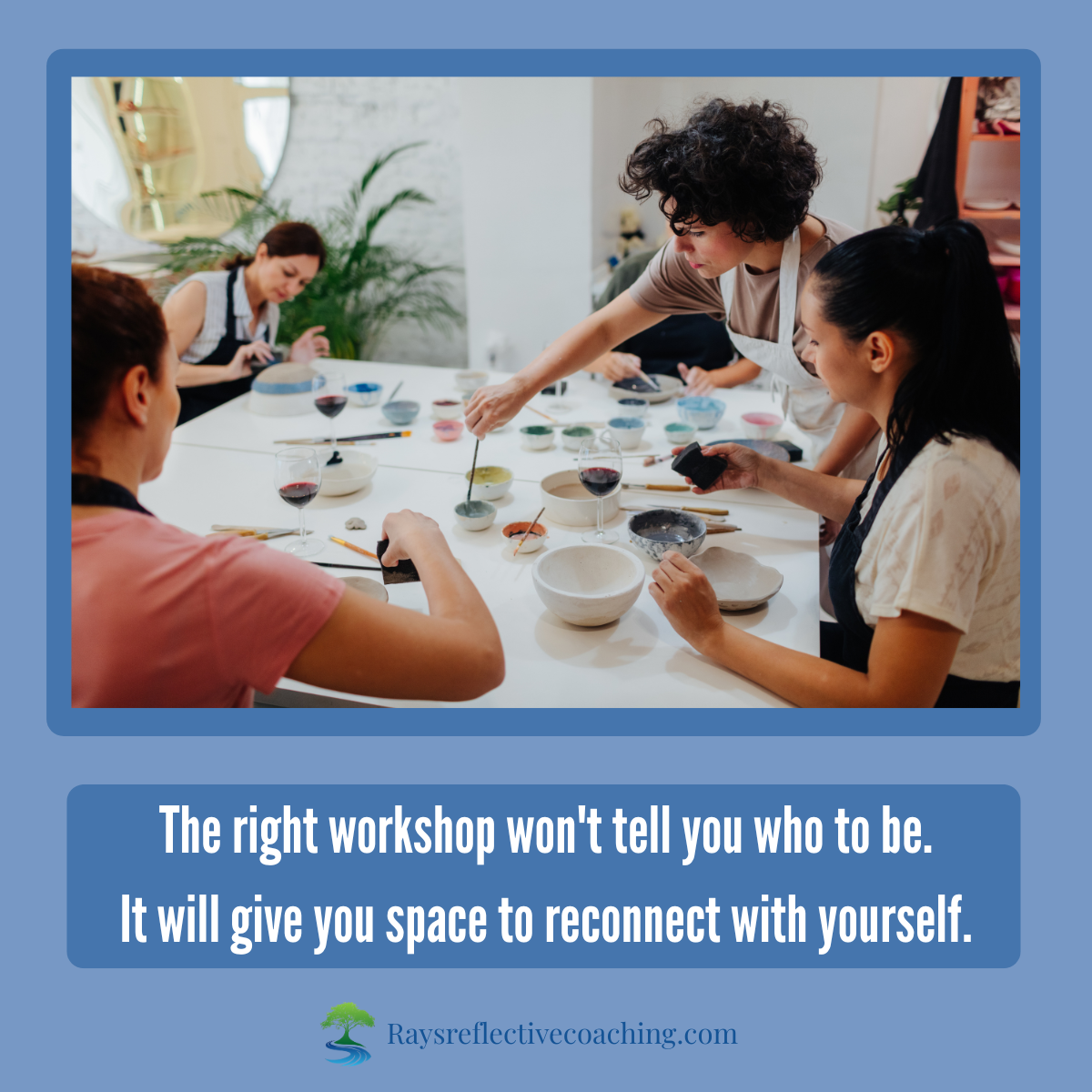
Taking time for yourself isn’t always easy.
Between work, family responsibilities and everyday commitments, many women spend so much time caring for others that their own well-being slips down the priority list.
That’s one reason why women’s wellbeing workshops in the UK have become increasingly popular. They offer dedicated time away from daily distractions, giving participants an opportunity to pause, reflect and reconnect with themselves in a supportive environment.
Unlike clinical services or formal education, wellbeing workshops are designed to encourage reflection, conversation and personal growth. Every workshop is different, but many combine guided activities, group discussion and practical exercises that help participants explore what matters most to them.
At Ray’s Reflective Coaching, Rachel’s workshops are centred on reflection rather than quick fixes. They are not about telling people how to live their lives or promising dramatic transformations. Instead, they provide a welcoming space where women can slow down, ask meaningful questions and develop greater self-awareness at their own pace.
In this guide, you’ll learn what wellbeing workshops typically include, who they may suit, how to choose one that feels right for you and what to expect before attending.
What Is a Women’s Wellbeing Workshop?
A women’s wellbeing workshop is a structured group session designed to support personal reflection and wellbeing.
Depending on the facilitator, workshops may focus on topics such as:
- confidence
- self-awareness
- personal values
- life transitions
- stress management
- boundaries
- communication
- mindfulness
- reflective journalling
- personal growth
Some workshops last a few hours.
Others take place over a full day or weekend.
There is no single format, which is why understanding the facilitator’s approach before booking is important.
What Happens During a Wellbeing Workshop?
Although every facilitator works differently, many workshops include a combination of:
Guided Reflection
Participants are invited to think about meaningful questions relating to their lives, relationships or future direction.
Reflection may take place through writing, quiet thinking or guided discussion.
Individual Activities
Some exercises are completed independently, allowing participants to reflect privately before deciding whether they wish to share anything with the group.
There is rarely any obligation to speak if you prefer simply to listen.
Group Conversations
Many workshops include opportunities for small-group or whole-group discussion.
Listening to different perspectives can often encourage fresh thinking while helping participants realise they are not alone in their experiences.
Practical Exercises
Activities may include:
- values exploration
- journalling prompts
- goal-setting exercises
- confidence-building reflections
- boundary-setting activities
- mindfulness or grounding practices
The emphasis is usually on encouraging thoughtful reflection rather than achieving immediate solutions.
Time to Pause
Unlike many everyday environments, wellbeing workshops often include intentional periods of quiet reflection.
These moments allow participants to absorb ideas, process their thoughts and simply slow down.
Rachel’s Workshop Style
My workshops are designed to create a calm, welcoming environment where women feel comfortable exploring their thoughts without pressure or judgement.
Rather than standing at the front delivering lengthy presentations, I prefer to guide conversations that encourage genuine reflection.
You’ll never be expected to share more than feels comfortable.
Some people enjoy speaking within the group.
Others prefer to listen quietly and reflect in their own way.
Both approaches are equally valid.
The aim isn’t to provide all the answers.
It’s to create space where you can begin discovering your own.
Who Might Benefit from a Wellbeing Workshop?
Women’s wellbeing workshops may appeal to those who are:
- navigating a life transition
- looking to reconnect with themselves
- exploring personal growth
- experiencing changes in confidence
- seeking supportive community
- wanting time away from everyday responsibilities
- interested in reflective practices
- curious about coaching before committing to individual sessions
People attend workshops for many different reasons.
Some arrive with a specific challenge they want to reflect on.
Others simply know they need time to pause and reconnect with themselves.
Both are perfectly valid reasons to attend.
Workshops Are Not Therapy
One of the most important things to understand is that a wellbeing workshop is not the same as counselling, psychotherapy or medical treatment.
Workshops are designed to support reflection, learning and personal development.
They do not diagnose, assess or treat physical or mental health conditions.
If you are experiencing significant emotional distress or require clinical support, speaking with your GP or another appropriately qualified healthcare professional is the most appropriate first step.
Reflective workshops may complement other forms of support, but they should never replace professional healthcare.
How to Choose the Right Women’s Wellbeing Workshop
With so many wellbeing events available across the UK, choosing one can feel overwhelming.
Beautiful venues and inspiring marketing can certainly catch your attention, but the most important questions go beyond the location or the schedule.
A workshop should feel like a good fit for your needs, values and comfort level.
Before booking, take some time to understand the facilitator’s approach and what the day is actually designed to offer.
The right workshop isn’t necessarily the one with the biggest promises, it’s the one that creates a safe, supportive environment where you feel able to reflect and participate at your own pace.
Questions to Ask Before You Book
Whether you’re considering a local wellbeing workshop or travelling further afield, these questions can help you make an informed decision.
Who is leading the workshop?
Find out about the facilitator’s background, qualifications and experience.
Look for information about their professional training, coaching credentials or relevant experience working with groups.
A trustworthy facilitator should be transparent about their experience and the scope of what they offer.
What is the purpose of the workshop?
Some workshops focus on relaxation.
Others centre on personal development, confidence, creativity or reflective coaching.
Understanding the aim of the event helps you decide whether it aligns with what you’re looking for.
What activities are included?
Ask whether the workshop includes:
- group discussions
- journalling
- guided reflection
- practical exercises
- mindfulness activities
- outdoor sessions
- creative activities
Knowing the format beforehand helps you arrive with realistic expectations.
How large is the group?
Some people enjoy larger events with opportunities to meet many new people.
Others feel more comfortable in smaller groups where conversations are more personal.
If group size matters to you, don’t hesitate to ask before booking.
Can I participate without sharing personal details?
A well-facilitated workshop should never pressure anyone to speak.
Good facilitators create opportunities for discussion while respecting that everyone has different comfort levels.
Listening quietly is a perfectly valid way to participate.
Creating a Safe and Supportive Environment
Feeling emotionally safe is an important part of any wellbeing event.
While workshops aren’t clinical environments, they should still be thoughtfully facilitated.
A supportive workshop usually includes:
- clear expectations at the beginning
- respectful group guidelines
- opportunities to participate at your own pace
- kindness towards different experiences and perspectives
- appropriate breaks throughout the day
- a welcoming, non-judgemental atmosphere
No participant should feel pressured to disclose personal experiences or emotions if they don’t wish to.
The goal is to encourage reflection, not vulnerability for its own sake.
Accessibility Matters
Every participant should be able to understand what to expect before attending.
If you’re considering a workshop, it’s helpful to check practical details such as:
- venue accessibility
- parking or public transport
- step-free access where needed
- toilet facilities
- refreshments
- session timings
- scheduled breaks
- whether indoor or outdoor activities are included
If you have accessibility requirements, it’s worth contacting the organiser in advance.
A good facilitator will be happy to discuss what adjustments may be possible.
Rachel’s Approach to Workshops
When I design a workshop, I don’t expect everyone to arrive with the same experiences or goals.
Some women come looking for clarity.
Others simply want permission to pause.
Some enjoy contributing to discussions, while others prefer quiet reflection.
All of those experiences are welcome.
I believe meaningful reflection happens when people feel safe, respected and free to engage in their own way.
That’s why my workshops focus on creating a calm environment rather than encouraging dramatic emotional experiences or promising life-changing breakthroughs.
The value isn’t found in how much you share.
It’s found in giving yourself the opportunity to slow down and listen to your own thoughts.
Wellbeing Workshop vs Wellbeing Retreat
Although the terms are sometimes used interchangeably, workshops and retreats are usually quite different.
Workshop | Retreat |
Usually lasts a few hours or one day | Often takes place over a weekend or several days |
Focuses on one or more specific themes | Provides a more immersive experience |
Easier to fit around everyday commitments | Requires more dedicated time away |
Often held locally | May involve travel and accommodation |
Suitable for exploring reflective practices | Allows for deeper reflection over a longer period |
Neither option is better than the other.
If you’re new to reflective coaching or group wellbeing experiences, a workshop can be an excellent place to begin.
Those looking for a longer, more immersive experience may later decide that a retreat better suits their needs.
Setting Realistic Expectations
One of the most helpful ways to approach a wellbeing workshop is with curiosity rather than expectation.
You don’t need to arrive with a specific goal or leave with every answer.
Some people finish a workshop feeling inspired.
Others leave with one important insight or a single meaningful question to explore further.
Both outcomes are valuable.
Personal growth often happens gradually, through ongoing reflection rather than dramatic moments of change.
Frequently Asked Questions
Every workshop is different, but most include a combination of guided reflection, practical exercises, individual activities and optional group discussion.
At Ray's Reflective Coaching, workshops are designed to provide a calm, welcoming environment where women can pause, reflect and reconnect with themselves. Activities may include reflective journalling, values-based exercises, thoughtful conversations and opportunities for quiet personal reflection.
There is no expectation that you share personal experiences if you don't wish to. You are encouraged to participate in a way that feels comfortable for you.
Start by considering what you're hoping to gain from the experience.
Ask yourself:
- Am I looking for education, reflection or relaxation?
- Does the facilitator clearly explain their approach?
- Are the facilitator's qualifications and experience available?
- Does the workshop description match what I'm looking for?
- Will I feel comfortable with the group size and format?
- Is the venue suitable for my accessibility needs?
The best workshop isn't necessarily the most expensive or the most popular. It's the one that aligns with your goals and provides a respectful, supportive environment.
No.
Most wellbeing workshops welcome participants who are completely new to coaching or reflective practice.
You don't need any special knowledge or experience to take part. Simply arriving with an open mind and a willingness to reflect is enough.
Not unless you choose to.
Many women appreciate listening, reflecting and writing privately rather than speaking in front of a group.
Rachel encourages participation without pressure, recognising that everyone processes experiences differently.
Your level of involvement is always your choice.
Both offer opportunities for reflection, but they provide different experiences.
A workshop allows you to learn alongside other women, hear different perspectives and participate in guided activities within a group setting.
One-to-one coaching provides dedicated time to focus entirely on your own circumstances, goals and reflections.
Some women begin with a workshop before deciding whether individual coaching would also be helpful.
Reflection Doesn’t Need to Be Perfect
Many women delay attending a workshop because they believe they need to be “ready.”
Ready to share.
Ready to know what they want.
Ready to explain how they’re feeling.
In reality, none of those things is necessary.
You don’t need to arrive with a perfectly organised plan or a list of answers.
Sometimes, the most valuable part of a workshop is simply giving yourself permission to pause.
To breathe.
To think without interruption.
To notice what has been quietly asking for your attention.
Reflection isn’t about getting everything right.
It’s about creating enough space to hear yourself again.
Rachel’s Reflection
One of my favourite moments in every workshop is watching the atmosphere begin to change.
People often arrive carrying busy minds and full calendars.
There’s sometimes a little uncertainty too.
But as the day unfolds, conversations become more relaxed, shoulders soften and people begin giving themselves permission to slow down.
That doesn’t happen because anyone has found the perfect answer.
It happens because they’ve created space to stop rushing.
I believe we spend so much of life responding to other people’s needs that we rarely ask ourselves one simple question:
“What do I need right now?”
A workshop isn’t about escaping real life.
It’s about stepping out of the noise for a little while so you can return with greater awareness of yourself and what matters most.
If you leave with one meaningful insight or one question that stays with you long after the day ends, then the workshop has done something valuable.
Enquire About an Upcoming Workshop
If you’re looking for a thoughtful, supportive space to reflect, connect with other women and explore what matters most to you, a wellbeing workshop could be a meaningful place to begin.
Rachel’s workshops are intentionally designed to be welcoming, reflective and practical. Rather than promising dramatic transformation, they encourage honest conversations, personal insight and gentle exploration in a respectful group environment.
Whether you’re navigating a life transition, seeking greater clarity or simply wanting to invest some time in your own wellbeing, you’ll be invited to participate in a way that feels comfortable for you.
Enquire about an upcoming workshop to learn more about future dates, locations, group sizes and what each session includes.


