
Blog
Menopause and Identity: Reflective Coaching Questions for a Major Life Transition

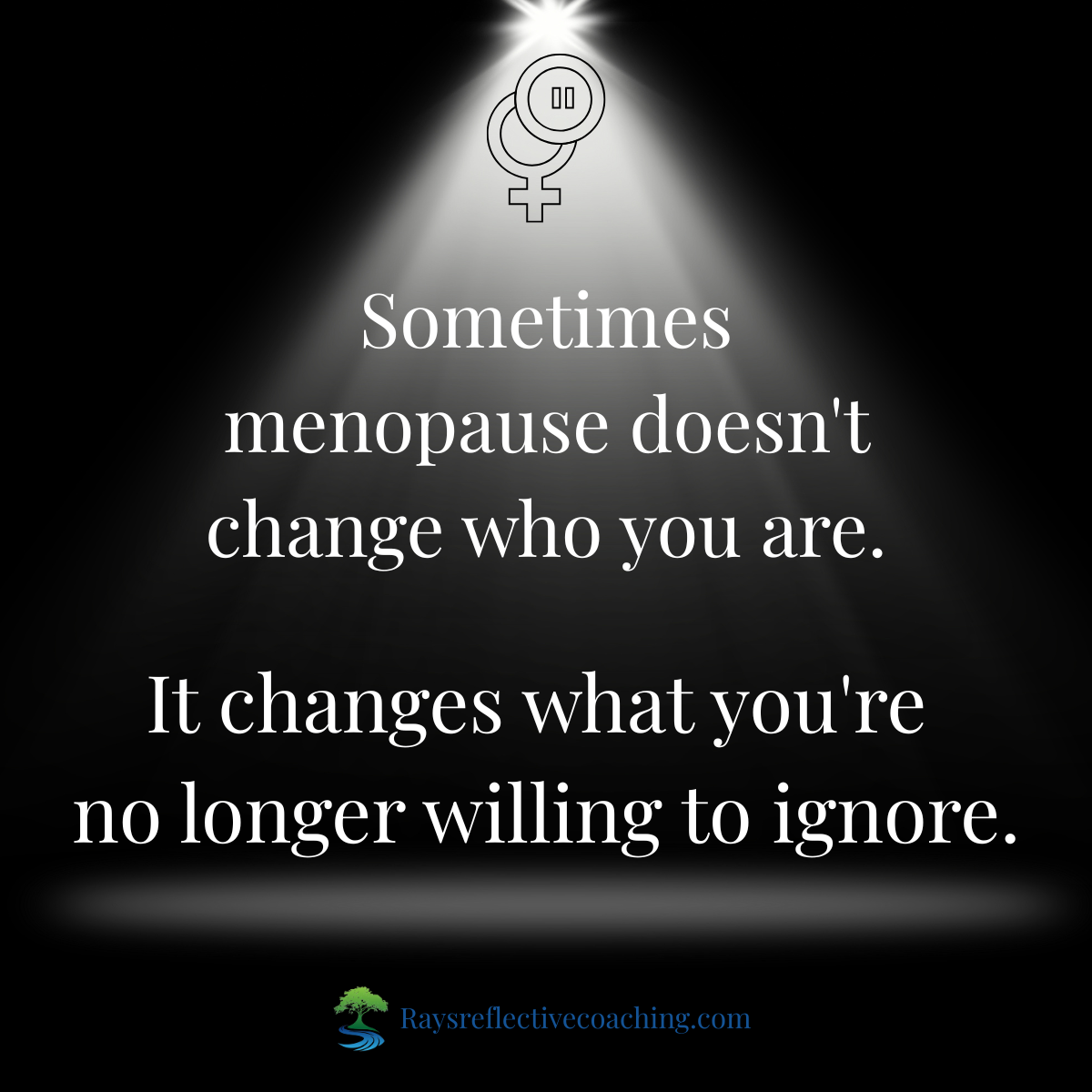
For many women, menopause is about much more than physical changes.
It can also be a time when long-held assumptions, priorities and roles begin to shift. You may find yourself questioning who you are, what matters to you now or how you want the next stage of your life to look.
These questions don’t necessarily arise because something is wrong.
They often emerge because life itself is changing.
Children may have grown up and become more independent. Careers may be evolving or winding down. Relationships can change. Caring responsibilities may increase. Long-held routines may no longer feel right.
All of these experiences can influence your sense of identity.
If you’ve searched for menopause and identity coaching, you’re not alone. Many women are looking for a supportive space to reflect on these changes, not because they need someone to give them answers, but because they want time to reconnect with themselves.
At Ray’s Reflective Coaching, Rachel offers reflective coaching that supports women through significant life transitions. Coaching doesn’t treat menopause or replace medical care. Instead, it provides an opportunity to pause, explore your thoughts and consider how you want to move forward with greater clarity and self-understanding.
In this guide, we’ll explore why menopause can influence identity, share practical reflection questions and explain how coaching may support this important stage of life.
Why Menopause Can Feel Like an Identity Shift
Identity is shaped over many years.
It develops through our experiences, relationships, work, family roles, beliefs and personal values.
When life changes, it’s natural for our sense of identity to change too.
For some women, menopause arrives at the same time as several other transitions, such as:
- children leaving home
- career changes
- becoming a grandparent
- caring for ageing parents
- relationship changes
- retirement planning
- reassessing personal goals
When several life changes happen at once, it’s understandable to begin asking questions such as:
- Who am I now?
- What do I want from this next chapter?
- Have I been living according to my own values?
- What would I like to change moving forward?
These questions are a normal part of personal reflection and don’t necessarily indicate that something is wrong.
Looking Beyond Labels
Many women spend years being known primarily through the roles they fulfil.
Perhaps you’ve been:
- a parent
- a partner
- a caregiver
- a professional
- a business owner
- the dependable friend
- the organiser of everyone else’s lives
While these roles can be deeply meaningful, they don’t tell the whole story of who you are.
As life changes, you may begin to wonder what remains when some of those roles evolve.
Reflective coaching creates space to explore your identity beyond job titles, responsibilities and expectations.
Instead of asking, “Who should I be?”, coaching encourages a different question:
“Who feels most authentic to me now?”
Rachel’s Perspective
One thing I’ve noticed throughout my coaching work is that many women arrive believing they need to become the person they used to be.
But often, that’s not what they’re truly looking for.
They’re looking for permission to become the person they’re growing into.
Menopause can be a powerful invitation to pause and ask deeper questions.
Rather than seeing this stage of life as something to simply get through, I encourage women to view it as an opportunity to reconnect with themselves.
During coaching, we don’t rush towards answers.
We create space to reflect with honesty, curiosity and compassion.
Some of the most meaningful conversations begin with very simple questions.
Not because they’re easy, but because they’re important.
Five Reflective Questions to Explore Your Identity
There are no perfect answers to these questions.
Their purpose is to encourage thoughtful reflection rather than immediate solutions.
1. What parts of myself have I been neglecting?
Perhaps you’ve spent years focusing on work, family or caring for others.
What interests, dreams or strengths would you like to reconnect with?
2. Which expectations no longer feel like mine?
Sometimes we continue living according to expectations that no longer fit.
Notice which responsibilities genuinely matter to you and which may have become habits rather than conscious choices.
3. What do I value most at this stage of life?
Values often evolve over time.
What feels most important now?
Peace?
Connection?
Creativity?
Purpose?
Freedom?
Growth?
4. What would I like the next chapter to include?
Rather than focusing only on what may be ending, consider what could be beginning.
What experiences would you like to create over the coming years?
5. What does living authentically mean to me today?
Authenticity isn’t about perfection.
It’s about making choices that feel more aligned with who you are becoming.
Identity Isn’t Something You Find Once
One of the biggest misconceptions about identity is that it remains fixed throughout life.
In reality, identity continues to evolve.
Every significant life experience changes us in some way.
Menopause can simply become one of those moments when that evolution becomes more noticeable.
Rather than trying to return to an earlier version of yourself, it may be more helpful to become curious about who you are now.
That curiosity often becomes the starting point for meaningful personal growth.
Learning to Communicate Your Changing Needs
As your priorities and sense of identity evolve, you may also notice that your needs begin to change.
Perhaps you need more quiet time than you used to.
Maybe you’re becoming more aware of how much energy certain commitments require.
Or perhaps you’re recognising that saying “yes” to everything is no longer sustainable.
One of the challenges many women face isn’t simply identifying these changes—it’s communicating them to others.
Friends, family members and colleagues may still expect the same version of you they’ve always known.
That can make it difficult to express new boundaries without feeling guilty.
Reflective coaching encourages you to communicate your needs with honesty and kindness, recognising that healthy boundaries support both you and the people around you.
Rachel’s Reflection Exercise: The Three Lists
One reflective exercise I often share with clients is called The Three Lists.
It’s a simple way to explore where your time and energy are currently going.
Take a notebook and create three headings.
List One: What Still Feels Like Me?
Write down the people, activities and values that continue to feel authentic and meaningful.
These are the parts of your life that still feel aligned with who you are today.
List Two: What No Longer Fits?
This list can include anything that feels out of alignment.
Perhaps it’s an expectation you’ve carried for years.
A commitment you’ve outgrown.
A role that no longer reflects who you’re becoming.
There’s no need to judge these observations.
Simply notice them.
List Three: What Am I Curious About?
The final list isn’t about making immediate decisions.
It’s about possibility.
What would you like to explore?
Perhaps it’s:
- learning something new
- spending more time outdoors
- joining a community
- returning to a creative hobby
- changing your work-life balance
- investing more time in yourself
Curiosity is often the beginning of meaningful change.
Building Confidence Through Small Changes
When people think about life transitions, they sometimes imagine dramatic changes.
In reality, confidence often grows through much smaller steps.
You don’t need to redesign your entire life overnight.
Instead, ask yourself:
- What is one conversation I’ve been avoiding?
- What is one boundary I could strengthen?
- What is one activity that helps me feel like myself?
- What is one small choice that aligns with my values?
These small actions often create momentum over time.
Support Options During Menopause
Every woman’s experience is different, which means the support she needs will be different too.
Depending on your circumstances, support may include:
- speaking with your GP
- evidence-based medical care where appropriate
- counselling or therapy if recommended
- community support groups
- women’s wellbeing workshops
- trusted friends and family
- reflective coaching
There is no rule that says you must choose only one form of support.
Many women find that combining different types of support allows them to care for both their physical wellbeing and their personal development.
Where Coaching Fits
Reflective coaching does not diagnose or treat menopause.
It doesn’t replace healthcare or counselling.
Instead, it creates space to reflect on questions that often arise during periods of change, such as:
- What do I want my future to look like?
- Which relationships support me?
- What values matter most now?
- How can I move forward with greater confidence?
- What would living more authentically look like?
Rachel’s coaching approach is grounded in listening rather than telling.
Rather than offering quick answers, she helps clients develop greater awareness of their own strengths, priorities and choices.
When Medical or Therapeutic Support Is Important
Some aspects of menopause require medical assessment or treatment.
If symptoms are affecting your health, daily life or emotional wellbeing, it’s important to speak with your GP or another appropriately qualified healthcare professional.
Likewise, if you are experiencing ongoing emotional distress or feel that counselling or therapy would better meet your needs, seeking support from a qualified mental health professional is an important step.
Coaching can complement these forms of support when appropriate, but it should never replace them.
You Don’t Need to Have Everything Figured Out
One of the greatest pressures many women place on themselves is believing they should already know what comes next.
But life transitions rarely unfold in a straight line.
There may be uncertainty.
There may be periods of reflection.
There may be times when you feel confident one week and unsure the next.
All of that is part of being human.
Giving yourself permission not to have every answer immediately can be one of the most compassionate choices you make.
Reflection isn’t about rushing towards certainty.
It’s about creating enough space to hear your own voice again.
Frequently Asked Questions
Menopause itself is a physical stage of life, but it often happens alongside many other personal changes.
For some women, it coincides with children becoming more independent, career changes, relationship shifts, caring for ageing parents or simply reaching a point where they begin to question long-held priorities.
These experiences can naturally lead to questions such as:
- Who am I now?
- What matters most to me?
- How do I want to spend the next stage of my life?
Not every woman experiences menopause as an identity shift, but for many, it becomes an opportunity to reflect on who they are beyond the roles they have spent years fulfilling.
Reflective coaching does not treat menopause or manage physical symptoms.
However, it may provide a supportive space to explore the personal and emotional changes that sometimes accompany this stage of life.
Coaching conversations might focus on:
- confidence
- identity
- life transitions
- personal values
- future goals
- relationships
- healthy boundaries
- reconnecting with yourself
If you're experiencing symptoms that affect your health or quality of life, it's important to seek advice from your GP or another appropriately qualified healthcare professional.
Many women describe feeling different during menopause, although everyone's experience is unique.
Some notice changes in confidence or priorities.
Others find themselves reassessing relationships, work or how they want to spend their time.
Feeling that your perspective is changing doesn't necessarily mean something is wrong.
Periods of transition often encourage reflection and personal growth.
Giving yourself permission to explore those changes with curiosity can be more helpful than expecting immediate certainty.
Confidence rarely returns through one dramatic moment.
More often, it grows through small, consistent actions.
That might include:
- recognising your strengths
- setting healthier boundaries
- reconnecting with interests you've neglected
- spending time with supportive people
- celebrating small achievements
- making choices that align with your values
Reflective coaching can provide space to explore these areas, but the process will look different for every individual.
This is one of the most common questions women ask during significant life transitions.
After years of focusing on work, family or caring responsibilities, it can feel unfamiliar to ask yourself what you actually want.
You don't need to have the answer immediately.
Sometimes the first step is simply becoming curious again.
Curiosity often comes before clarity, and giving yourself permission to explore without pressure can be an important part of moving forward.
This Chapter Can Be One of Discovery
It’s easy to think of menopause only in terms of endings.
Yet for many women, it also becomes a time of new beginnings.
A chance to question old expectations.
A chance to rediscover forgotten interests.
A chance to build relationships that feel more balanced.
A chance to make choices based on who you are today rather than who you were years ago.
That doesn’t mean the journey is always straightforward.
There may be uncertainty, moments of frustration and periods where life feels unfamiliar.
But those moments can also create space for growth, reflection and renewed purpose.
Rachel’s Final Reflection
One of the greatest privileges of coaching is watching women realise they don’t need permission from anyone else to begin living more authentically.
Many arrive believing they have somehow lost themselves.
But I don’t see someone who is lost.
I see someone who has spent many years meeting responsibilities, supporting others and adapting to life’s changes.
Now they’re simply being invited to pause and ask a different question.
Not, “How do I get back to who I was?”
But, “Who do I want to become from here?”
There is no perfect answer.
Only the opportunity to listen to yourself with honesty, kindness and curiosity.
That’s where meaningful reflection begins.
Explore Support for Life Changes
Major life transitions rarely come with a clear roadmap.
Whether you’re navigating menopause, changing priorities, shifting relationships or simply feeling that life is asking different questions of you, you don’t have to work through those changes alone.
Reflective coaching offers a calm, supportive environment where you can slow down, explore your thoughts and move forward in a way that feels aligned with your values.
If you’re looking for space to reflect on your next chapter, not to be given all the answers, but to discover your own, Rachel’s coaching approach may provide the support you’re looking for.
Explore support for life changes and discover how reflective coaching can help you navigate periods of change with greater clarity and confidence.


